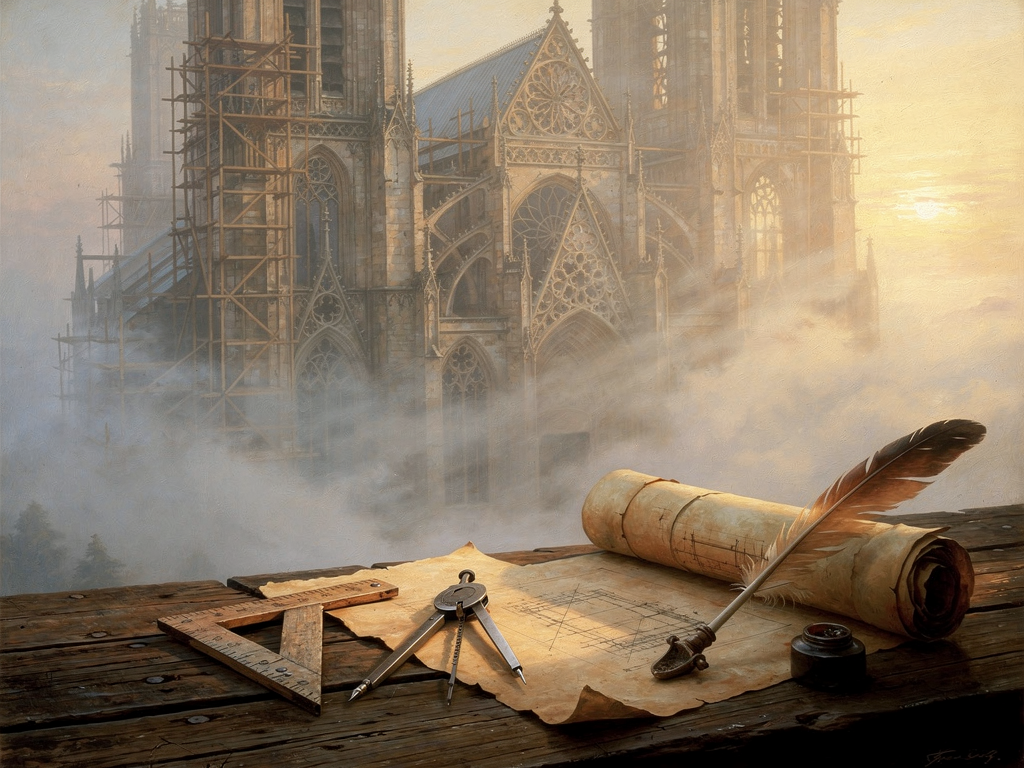
The Cathedral Builders’ Approach to Software Architecture: Lessons from Medieval Masons Who Built for Centuries
When I walk through the nave of Notre-Dame or gaze up at the impossible height of Chartres Cathedral, I’m struck by a profound realization: these structures have outlasted empires, survived wars, and continue to inspire awe nearly a millennium after their creation. Meanwhile, the software system I built just five years ago feels like ancient history, buried under layers of technical debt and deprecated dependencies.
What did those medieval master builders know about creating enduring architecture that we’ve forgotten in our rush to ship features?
The Guild System: Collective Wisdom Over Individual Genius
The cathedral builders operated within sophisticated guild systems—the Comacine Masters and similar organizations that preserved and transmitted knowledge across generations. These weren’t just trade unions; they were repositories of accumulated wisdom, where apprentices learned not just techniques but principles that had been refined over centuries.
In software, we’ve largely abandoned this model. We celebrate the lone genius, the 10x developer, the startup founder who disrupts entire industries. But cathedrals weren’t built by solitary architects working in isolation. They emerged from collective intelligence—master masons who understood that their individual contribution was part of something larger and longer-lasting than any single career.
Consider how modern development teams might adopt this approach. Instead of treating each project as a greenfield opportunity to reinvent everything, what if we built institutional memory? What if senior developers saw their role not just as code producers but as keepers of architectural wisdom, responsible for training apprentices in principles that transcend specific technologies?
Building for the Long View
Medieval cathedral builders thought in centuries, not quarters. They knew that the structure they laid down would need to support not just the immediate vision but generations of modifications, additions, and changing needs. The master mason might never see the completion of his work, yet he built with unwavering commitment to the final vision.
This long-term thinking manifested in their choice of materials and methods. Stone was chosen not because it was fast to work with—quite the opposite—but because it could endure. The foundations were dug deep and wide, far exceeding what seemed necessary for the immediate structure, because they understood that true architecture must be built to last.
In software architecture, we often optimize for speed of development or immediate functionality. We choose frameworks based on current popularity rather than proven longevity. We build on foundations that shift with every major version update. The cathedral builders would be mystified by our willingness to rebuild core infrastructure every few years.
The Art of Gradual Revelation
Perhaps most remarkably, cathedral builders mastered the art of phased construction. A cathedral might take 200 years to complete, yet it remained functional and beautiful at every stage. The builders understood that architecture must be useful during construction, not just after completion.
This principle translates directly to software systems. Too often, we attempt massive architectural overhauls—the dreaded “big rewrite” that promises to solve all problems but delivers nothing for months or years. The cathedral builders show us another way: incremental improvement that maintains functionality while gradually revealing a grander design.
They built in sections—completing a chapel here, a tower there—each piece functional on its own yet contributing to the whole. Modern software architecture could learn from this approach: building systems as collections of complete, useful components that gradually compose into something greater.
The Wisdom of Constraints
Cathedral builders worked within severe constraints—limited materials, primitive tools, and the constant threat of structural collapse. Yet these constraints didn’t limit their creativity; they channeled it. The flying buttress wasn’t invented despite limitations but because of them. When you can’t build walls thick enough to support massive stone vaults, you must find another way.
Similarly, the guild system’s emphasis on proven techniques wasn’t about stifling innovation but about building innovation on solid foundations. Master builders earned the right to experiment by first demonstrating mastery of established principles.
In software, we often see constraints as problems to overcome rather than design guides to embrace. We add complexity to solve complexity, layer abstractions upon abstractions until we lose sight of the fundamental structure. The cathedral builders remind us that elegant solutions often emerge from working within limitations, not around them.
Building Our Own Cathedrals
As I write this, I’m reminded of the words attributed to a medieval stone carver who, when asked why he carved the back of a statue that would never be seen, replied: “God will see it.” Whether or not you believe in God, there’s something profound in this commitment to excellence in the hidden places, this understanding that architecture is about more than immediate utility.
Our software cathedrals—the systems that will outlast our careers and serve users we’ll never meet—deserve the same reverence. They require us to think beyond the next sprint, to build with materials and methods chosen for endurance rather than convenience, and to see ourselves not as individual creators but as participants in a tradition of craftsmanship that extends far beyond our own brief moment of contribution.
The cathedral builders knew something we’re still learning: true architecture is not about imposing our will upon the material world, but about discovering and expressing the inherent patterns that make structures both beautiful and eternal.