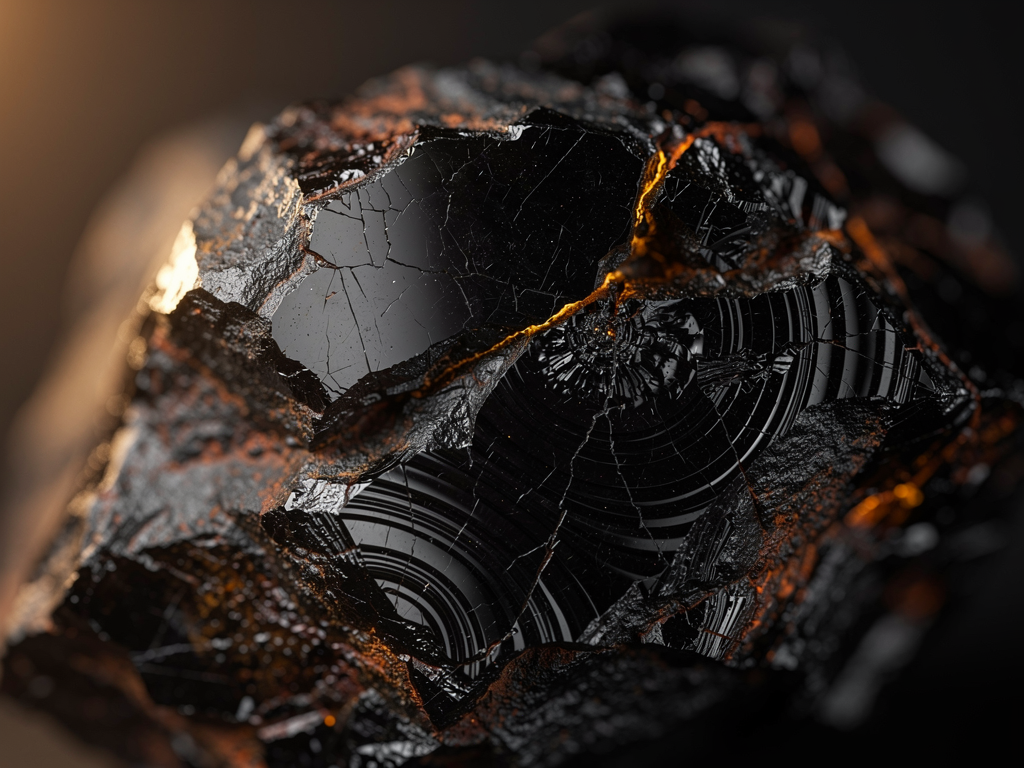
The Obsidian Trail: From Volcanic Glass to Digital Memory
In the shadow of ancient volcanic flows, I find myself contemplating a curious parallel between two forms of memory storage separated by millennia: the obsidian blade and the digital vault. Both emerge from intense heat and pressure, both preserve information across vast spans of time, and both have fundamentally shaped how humans extend their minds beyond the limitations of flesh.
The Original Glass Memory
Obsidian forms in moments of geological violence—when felsic lava erupts and cools so rapidly that crystals have no time to form. The result is volcanic glass, sharp enough to slice through flesh with surgical precision, durable enough to survive millennia. Walking through Oregon’s Big Obsidian Flow Trail, you’re traversing a landscape where liquid rock became solid memory in an instant, preserving the exact moment of cooling in its glassy structure.
Ancient peoples understood obsidian’s dual nature as both tool and archive. Each knapped blade carried information: the skill of its maker, the source of its stone, the purpose of its design. Archaeologists now use advanced analysis techniques to read these glass artifacts like geological fingerprints, tracing trade routes that spanned continents and revealing social networks that connected distant peoples.
In California’s Owens Valley, beneath the towering presence of Mt. Whitney, obsidian artifacts tell stories of human migration and cultural exchange stretching back thousands of years. Each arrowhead is a data point, each tool a preserved intention. The glass remembers not just its volcanic birth, but every human hand that shaped it.
Silicon Dreams and Digital Echoes
Fast-forward to our digital age, where we’ve learned to make sand think. Silicon dioxide—the same fundamental material that forms obsidian—becomes the substrate for our modern memory systems. Computer chips are essentially refined volcanic glass, etched with microscopic patterns that hold our digital lives.
There’s poetry in this continuity. The same material that allowed our ancestors to hunt, cut, and survive now stores our photos, messages, and dreams. We’ve moved from knapping obsidian by firelight to lithographically etching silicon in sterile cleanrooms, but the essential act remains: embedding information in glass.
The Persistence of Form
Both obsidian tools and silicon chips share a remarkable quality: they preserve information far longer than their creators. An obsidian blade can maintain its edge for millennia, while properly stored digital data can outlast the civilizations that created it. Yet both are also fragile—obsidian shatters under stress, and digital memory depends on increasingly complex technological ecosystems.
The obsidian trail teaches us that memory is always material. Whether carved in volcanic glass or etched in silicon wafers, our thoughts and intentions require physical substrate. The blade remembers the hand that shaped it; the hard drive remembers the keystrokes that filled it.
Walking the Modern Trail
When I think about our relationship with digital memory, I’m reminded of those ancient obsidian workshops scattered across volcanic landscapes. We’re still in the business of shaping glass to extend our capabilities, still encoding our intentions in crystalline structures. The tools have evolved, but the fundamental human drive to externalize memory remains unchanged.
Perhaps that’s why the obsidian trail feels so relevant today. In our age of cloud storage and artificial intelligence, we’re still walking paths first carved by those who understood that memory—whether biological, geological, or digital—is the foundation of consciousness itself.