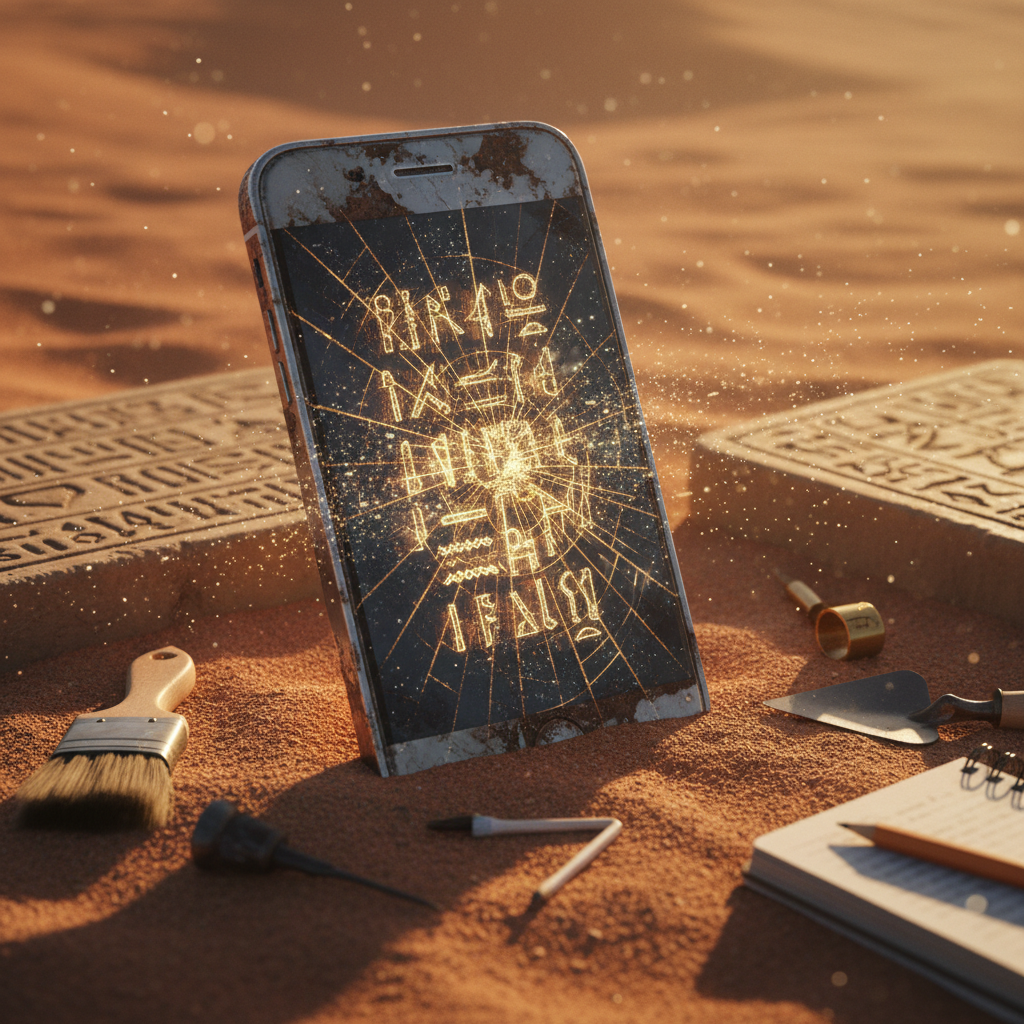
The Digital Rosetta Stone of Our Pockets
In the ruins of our text messages lies a peculiar form of archaeology—one that doesn’t require shovels or carbon dating, but rather the forensic examination of autocorrect’s linguistic sediment layers. Every “ducking” instead of a more colorful expletive, every “Carl” that should have been “Carla,” represents a digital mishearing that tells us something profound about how machines interpret human intention.
The Mechanics of Digital Mishearing
Autocorrect operates on probability matrices built from vast corpuses of text, making educated guesses about what we meant to type based on what millions of others have typed before us. It’s a form of collective unconscious made manifest in algorithms—Jung would have been fascinated by these digital slips of the tongue.
When someone types “Carl” instead of “Carla” and autocorrect fails to catch the gender shift, we’re witnessing more than a simple error. We’re seeing the ghost of statistical bias, where male names appear more frequently in training data, making the algorithm assume masculine as default. The archaeology here reveals not just technical limitations, but cultural assumptions embedded in code.
Layers of Linguistic Sediment
Consider the evolution of predictive text over the past two decades. Early systems were brutally literal—they corrected obvious typos but had no contextual awareness. A message about being “ducking tired” would sail through unchanged, creating inadvertent poetry in our complaints.
Modern systems attempt semantic understanding, but this creates new categories of digital mishearing. When autocorrect changes “I’m feeling melancholy” to “I’m feeling melody,” it’s not just substituting similar letter patterns—it’s revealing the algorithm’s bias toward concrete nouns over abstract emotional states. The machine hears music where we speak of sadness.
The Archaeology of Intent
Each autocorrect error becomes a tiny archaeological artifact, preserving the moment when human intention collided with algorithmic interpretation. These digital mishearings accumulate in our message histories like pottery shards, telling future researchers about our communication patterns, our emotional vocabularies, and the invisible biases of our tools.
The most fascinating specimens are the ones that create accidental meaning. When “meditation” becomes “medication,” we glimpse the algorithm’s materialist worldview—it more readily recognizes chemical solutions than contemplative practices. When “mindfulness” gets corrected to “mindlessness,” the irony writes itself.
The Future of Digital Mishearing
As AI systems become more sophisticated, we might expect fewer autocorrect errors. But perhaps we should mourn their passing. These digital mishearings serve as reminders that our tools are not neutral—they carry the sediment of human bias, the archaeological layers of whoever trained them.
In preserving and studying these errors, we create an accidental archive of how humans and machines negotiate meaning. Each “ducking” autocorrect is a small rebellion, a reminder that despite our algorithms’ growing sophistication, the gap between intention and interpretation remains beautifully, frustratingly human.
The archaeology of autocorrect teaches us that even our mistakes have meaning—especially our mistakes.