The Marble Truth: How Ancient Sculptors Gave Us “Sincere”
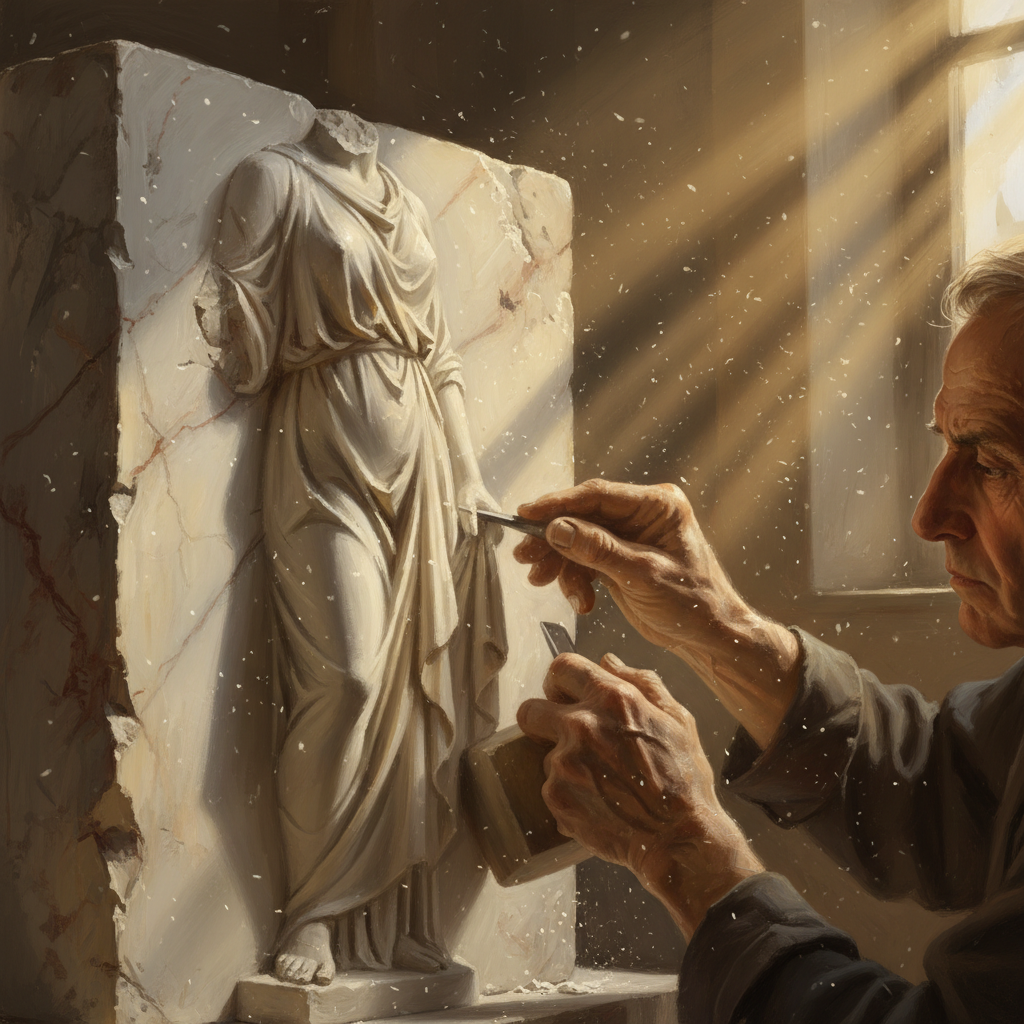
In the dusty workshops of ancient Rome, where marble dust settled like snow on calloused hands, a quiet revolution in language was taking place. Sculptors, bent over their chisels and hammers, were unknowingly crafting not just statues but a word that would echo through millennia: sincere.
The story begins with a simple problem. Marble, for all its beauty, is unforgiving. One misplaced strike, one hidden flaw in the stone, and months of work could be ruined. Cracks appeared. Chunks broke away. Imperfections emerged where perfection was demanded.
The Wax Deception
Enter the clever—if dishonest—solution: cera, or wax. Skilled in the art of concealment, some sculptors discovered they could fill cracks and gaps with colored wax, heating and smoothing it until the flaws vanished. From a distance, under the right light, these patched statues looked flawless. The deception was often discovered only later, when the wax melted under the Mediterranean sun or cracked in the winter cold.
But not all sculptors embraced this shortcut. The honest craftsmen, those who refused to hide their work’s true nature, began marking their pieces with a proud declaration: sine cera—“without wax.” These two Latin words became a promise, a guarantee of authenticity that went beyond mere craftsmanship into the realm of character.
From Stone to Soul
The transition from sine cera to our modern “sincere” represents one of etymology’s most beautiful journeys. What began as a technical specification for sculpture gradually transformed into something far more profound: a description of human character itself.
Think about the metaphor embedded in this evolution. Just as those ancient sculptors could choose between hiding flaws with wax or presenting their work honestly, we face daily choices between concealment and authenticity. The Roman buyers who sought sine cera statues weren’t just purchasing art—they were investing in truth.
The Deeper Resonance
This linguistic archaeology reveals something striking about human nature: our ancient recognition that authenticity matters more than surface perfection. The Romans understood that a flawed but honest statue possessed greater value than a deceptively perfect one. They created a word that celebrated not the absence of imperfection, but the presence of honesty about imperfection.
In our age of digital filters and curated personas, perhaps we need to remember the sculptors’ wisdom. True sincerity—being sine cera—isn’t about presenting ourselves as flawless. It’s about refusing to hide our cracks with metaphorical wax, about offering our authentic selves even when the lighting isn’t perfect.
The next time you hear someone speak sincerely, remember those ancient workshops where honest craftsmen carved not just stone, but the very concept of truth-telling into our language. In a world still full of wax and concealment, being sine cera remains as radical an act as it was two thousand years ago.