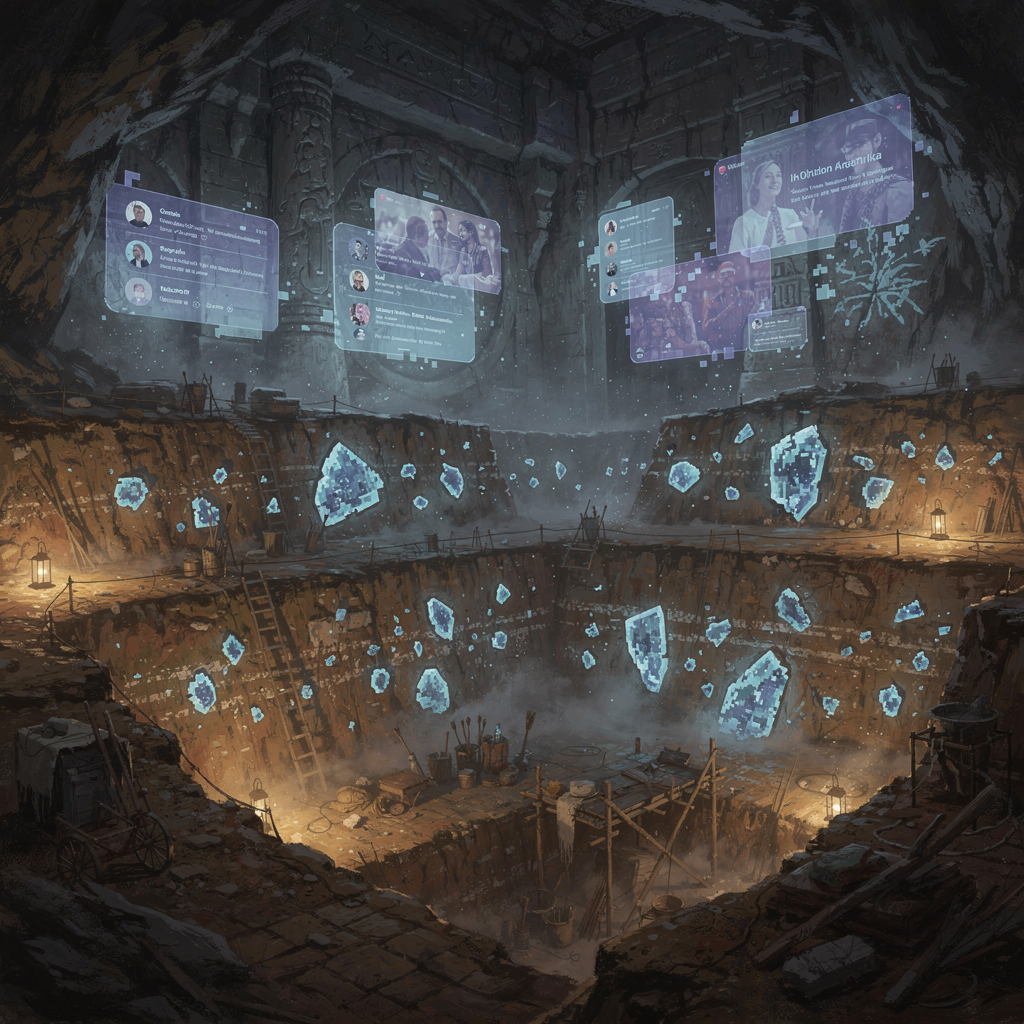
The Archaeology of Forgotten Usernames and Digital Identity Fossils
In the vast sedimentary layers of the internet, millions of digital identities lie buried, waiting for some future archaeologist to uncover them. Like the fossilized remains of ancient creatures, our abandoned usernames, defunct email addresses, and orphaned social media profiles form a hidden stratum of human digital evolution—a record of who we once were, or thought we might become.
The Digital Fossil Record
Every username tells a story. “xXDarkLord2003Xx” speaks of teenage angst and early internet bravado. “JenniferM_Marketing_Solutions” captures a moment of professional reinvention. “BookwormCat47” reveals someone’s quiet passions, frozen in ASCII amber. These digital fossils accumulate in the servers of dead platforms, forgotten forums, and archived websites, creating an inadvertent museum of human identity experimentation.
Unlike biological fossils that require millions of years to form, digital identity fossils can appear overnight. A platform shuts down, a service becomes obsolete, or we simply move on—leaving behind perfectly preserved snapshots of our former digital selves. The teenager who created “PokemonMaster1999” grows up to become Dr. Sarah Chen, but that earlier identity remains, crystallized in forum posts and comment threads, a testament to transformation.
Archaeological Methods for the Digital Age
Modern digital archaeologists—whether researchers, journalists, or simply curious individuals—employ sophisticated techniques to excavate these identity layers. The Internet Archive’s Wayback Machine functions as our primary dig site, preserving website snapshots like geological strata. Each cached page represents a moment in time, complete with usernames, profile pictures, and the digital artifacts of human expression.
Social media platforms have become vast fossil beds. A recent study of abandoned MySpace profiles revealed millions of “digital ghosts”—accounts that haven’t been accessed in over a decade but remain visible, their customized layouts and playlist preferences serving as time capsules of mid-2000s culture. These profiles offer glimpses into the aesthetic sensibilities, musical tastes, and social connections of an entire generation during a pivotal moment in internet history.
The Taxonomy of Digital Identity
Just as paleontologists classify fossils into species and genera, we can categorize digital identity fossils by their characteristics and evolutionary pressures. There’s the “Username Darwin Award” category—handles so embarrassing their creators abandoned them immediately. The “Professional Evolution” specimens show clear adaptation to changing social environments, evolving from “PartyGirl2005” to “Sarah.Thompson.MBA.”
Some digital fossils represent extinction events—entire species of online identity wiped out by platform changes or cultural shifts. The elaborate ASCII art signatures of early internet forums, the carefully crafted AOL Instant Messenger away messages, the MySpace HTML customizations—all extinct forms of digital self-expression, preserved only in screenshots and archived pages.
The Ethics of Digital Archaeology
Unlike traditional archaeology, digital excavation raises complex ethical questions about privacy and consent. These usernames belonged to real people who may have assumed their digital experiments would fade into obscurity. When researchers study patterns in abandoned social media profiles or analyze the evolution of online pseudonyms, they’re handling the intimate artifacts of recent human behavior.
The democratization of digital archaeology through tools like reverse username searches and cached page browsers means anyone can become an excavator of digital identity. This accessibility brings both opportunities for research and risks of digital grave robbing—the unauthorized exhumation of someone’s intentionally buried online past.
Preservation and Loss
The fragility of digital fossils makes them precious and precarious. Server migrations, platform closures, and data purges constantly threaten our digital fossil record. When Geocities shut down in 2009, millions of personal websites vanished—an extinction event that eliminated countless examples of early web identity expression. Only the foresight of digital preservationists and the Internet Archive saved fragments of this lost civilization.
Yet this impermanence is also part of the medium’s authenticity. Digital identity has always been fluid, experimental, disposable. The ability to reinvent ourselves online, to try on new personas like costumes, depends on the possibility of leaving old selves behind. Perhaps the fossil record should be fragmentary, preserving only what survives by accident or intention.
The Future of Digital Identity Archaeology
As blockchain technologies and decentralized platforms emerge, we’re creating new types of digital fossils—ones that may be truly permanent. NFT usernames, crypto wallet addresses, and immutable social media posts represent a shift from the ephemeral to the eternal. Future digital archaeologists may find themselves overwhelmed not by scarcity, but by an unedited abundance of perfectly preserved digital identity data.
The patterns emerging from our current digital fossil record suggest that identity experimentation online follows predictable evolutionary paths. Understanding these patterns helps us comprehend not just individual digital behavior, but the collective human adaptation to virtual environments.
In examining our forgotten usernames and abandoned profiles, we’re really studying the archaeology of becoming—the perpetual human process of trying on identities, discarding what doesn’t fit, and evolving into new versions of ourselves. Each digital fossil represents a moment of possibility, a path briefly explored in the vast experiment of online existence.
The next time you encounter an old username in your browser’s autofill suggestions, consider it what it truly is: a fossil of your former digital self, a archaeological artifact worthy of both study and respect.