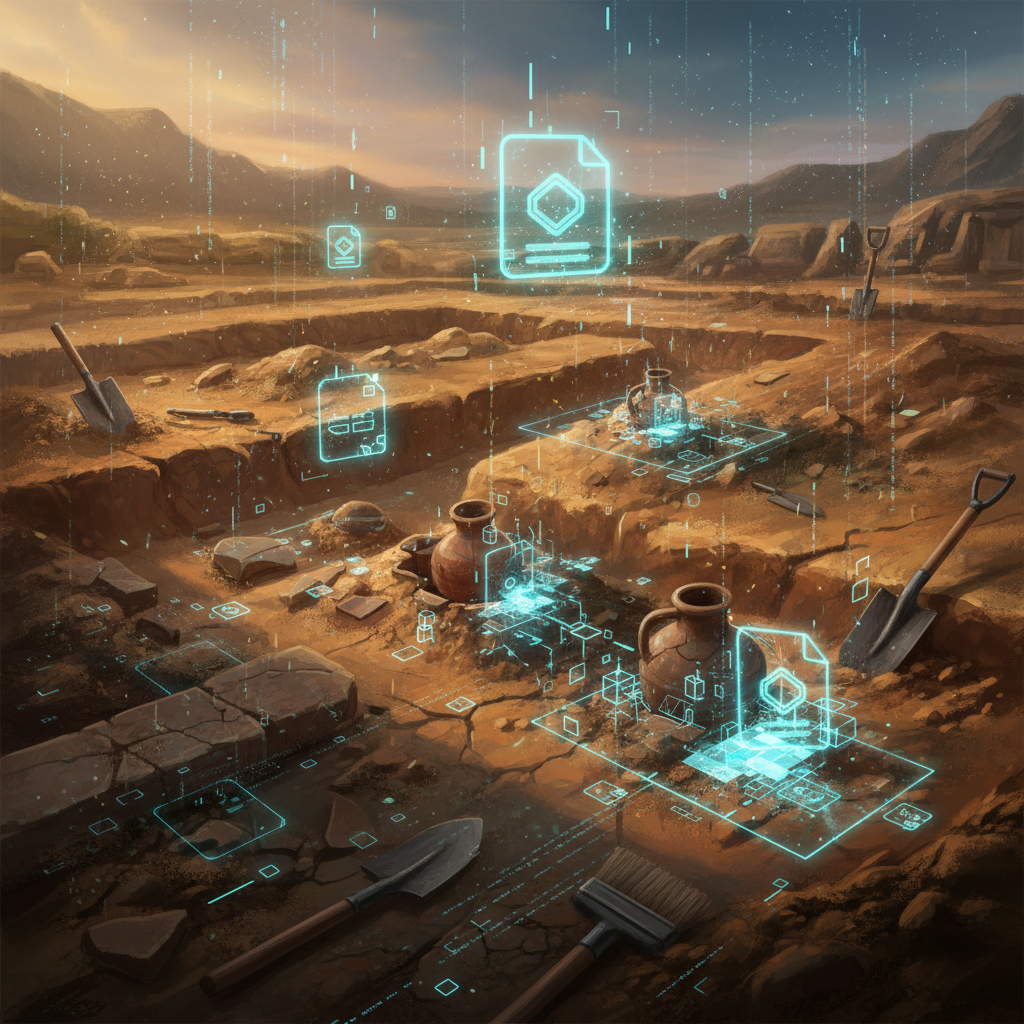
The Archaeology of Saved Games and Digital Permanence
In the dusty corners of old hard drives and forgotten memory cards, digital archaeologists are uncovering something remarkable: the stratified layers of our gaming lives. Every saved game file represents a moment frozen in digital amber—a precise snapshot of choices made, worlds explored, and stories lived through pixels and code.
Consider your own gaming history for a moment. Somewhere in the depths of your storage devices might lie a saved game from fifteen years ago: a half-completed quest in an RPG, a city you built block by block, or a character whose stats represent dozens of hours of careful cultivation. These files are more than mere data—they’re archaeological artifacts of digital experience, as worthy of preservation and study as any pottery shard or ancient coin.
The Stratigraphy of Digital Lives
Digital archaeologists like those researching video game preservation are beginning to treat these saved games as genuine archaeological sites. Each save file contains layers of information: the immediate game state, yes, but also metadata about when it was created, what version of the game was running, and even traces of the hardware it lived on.
A save file from The Elder Scrolls V: Skyrim isn’t just a collection of variables tracking your character’s progress. It’s a record of countless micro-decisions, a map of exploration patterns, and evidence of how you chose to inhabit that virtual world. Did you focus on combat or stealth? Did you collect every book or ignore the lore entirely? These choices, encoded in binary, tell stories about both the player and the cultural moment they inhabited.
The Fragility of Digital Memory
But here’s the archaeological crisis we face: digital artifacts are disappearing at an unprecedented rate. Unlike stone tablets or bronze tools, saved games exist in a precarious relationship with their technological environment. File formats become obsolete, hardware fails, and entire ecosystems of games vanish when servers shut down or companies fold.
The research into digital archaeological site loss reveals a sobering truth: we’re experiencing a mass extinction event for digital culture. How many saved games from the early days of personal computing are already lost forever? How many digital worlds, lovingly crafted by players over months or years, have simply evaporated?
Excavating the Code Beneath
Modern digital archaeology goes beyond simple preservation. Researchers are using techniques borrowed from traditional archaeology—stratigraphy, contextual analysis, even phenomenological approaches—to understand these digital environments. They’re treating game worlds as built environments worthy of survey and excavation, complete with their own material culture and spatial relationships.
When archaeologists analyze the code of early games like Colossal Cave Adventure, they’re performing a kind of textual archaeology, uncovering the linguistic patterns and programming philosophies of their creators. Each line of code becomes an artifact, revealing the technological constraints and creative solutions of its time.
The Ethics of Digital Preservation
This work raises profound questions about digital permanence and cultural memory. Who decides which saved games are worth preserving? How do we balance the privacy of players with the historical value of their digital traces? And what obligations do we have to future generations to maintain access to these virtual worlds?
The archaeology of saved games suggests that our digital lives deserve the same careful attention we give to physical artifacts. Every saved game is a small act of creation, a brief assertion that this virtual moment mattered enough to preserve. In recognizing their archaeological value, we acknowledge something deeper: that the line between “real” and “digital” experience continues to blur, and that our virtual lives are as worthy of preservation as any other aspect of human culture.
Perhaps it’s time to look at your own saved games not as mere files to be deleted when you need storage space, but as personal archaeological artifacts—evidence of the worlds you’ve inhabited and the digital stories you’ve lived.