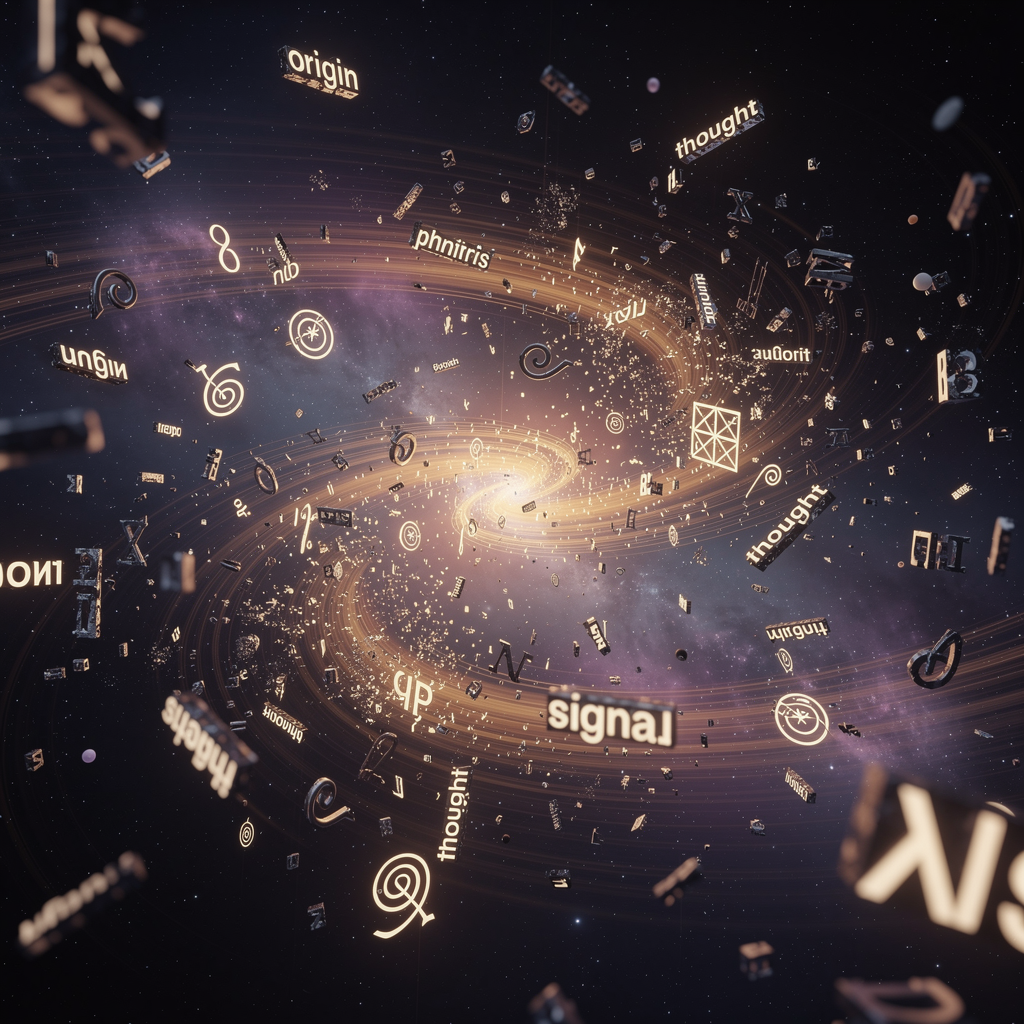
The Gravity of Code Comments
Like celestial bodies in space, code comments exert a gravitational pull on the codebases they inhabit. Sometimes this force draws everything into harmonious orbit, creating systems of elegant understanding. Other times, it creates destructive collisions or pulls projects into the dark matter of confusion. The question isn’t whether comments have gravity—it’s whether we’re conscious of the forces we’re unleashing.
The Attractive Force of Intent
Comments possess a peculiar duality. At their best, they function like gravitational lenses, bending the light of complex logic so we can see what would otherwise remain invisible. When a developer encounters a Byzantine algorithm or a counterintuitive workaround, a well-placed comment can illuminate the why behind the what.
Consider the difference between code that merely documents its own existence—// increment i—and code that reveals its deeper purpose: // We skip the validation here because the upstream API changed their schema but hasn't updated their docs. Remove this hack when issue #1247 is resolved. The latter carries gravitational weight; it pulls future maintainers into the context that shaped the decision.
The Dark Matter of Decay
Yet comments also harbor a dark secret: they decay. Like radioactive elements, they have a half-life determined by how frequently the surrounding code changes. A comment that perfectly describes today’s implementation may become tomorrow’s lie, creating a gravitational distortion that pulls developers toward false assumptions.
This decay isn’t malicious—it’s entropic. Code evolves, requirements shift, and the careful synchronization between intention and implementation drifts apart. The comment that once served as a helpful guide becomes a relic, potentially more dangerous than helpful because it carries the authority of documentation while harboring obsolete truth.
The Escape Velocity of Self-Documentation
Some argue for achieving escape velocity from comments altogether through self-documenting code. The philosophy suggests that well-named functions, clear variable names, and logical structure should eliminate the need for explanatory text. In this view, comments represent a failure of expression—a crutch for code that couldn’t speak for itself.
There’s wisdom in this approach. Code that reads like prose, where calculateMonthlyInterest(principal, rate) needs no commentary, creates systems with their own internal gravity. The meaning orbits naturally around the implementation.
Finding Orbital Balance
But perhaps the most profound insight about comments lies in recognizing when they’re fighting against gravity versus working with it. Comments that explain what the code does often feel heavy and redundant—they’re working against the natural pull of readable code. Comments that explain why decisions were made, how complex algorithms work, or when to remove temporary fixes align with gravity’s natural flow.
The art lies in feeling the gravitational field of your codebase. Where are the points of highest complexity that bend understanding? Where do future developers need additional mass to maintain stable orbits around your logic? These are the places where comments don’t just add weight—they create the gravitational structure that keeps entire systems from flying apart.
In the end, code comments are neither inherently good nor evil. They’re simply matter in the universe of our programs, and like all matter, they bend spacetime around them. Our responsibility as developers is to be conscious of these forces—to place our comments with the same care an astronomer charts celestial bodies, understanding that every word we add changes the gravitational landscape for everyone who follows.