The Archaeology of Accidental Vocabularies Through Digital Play
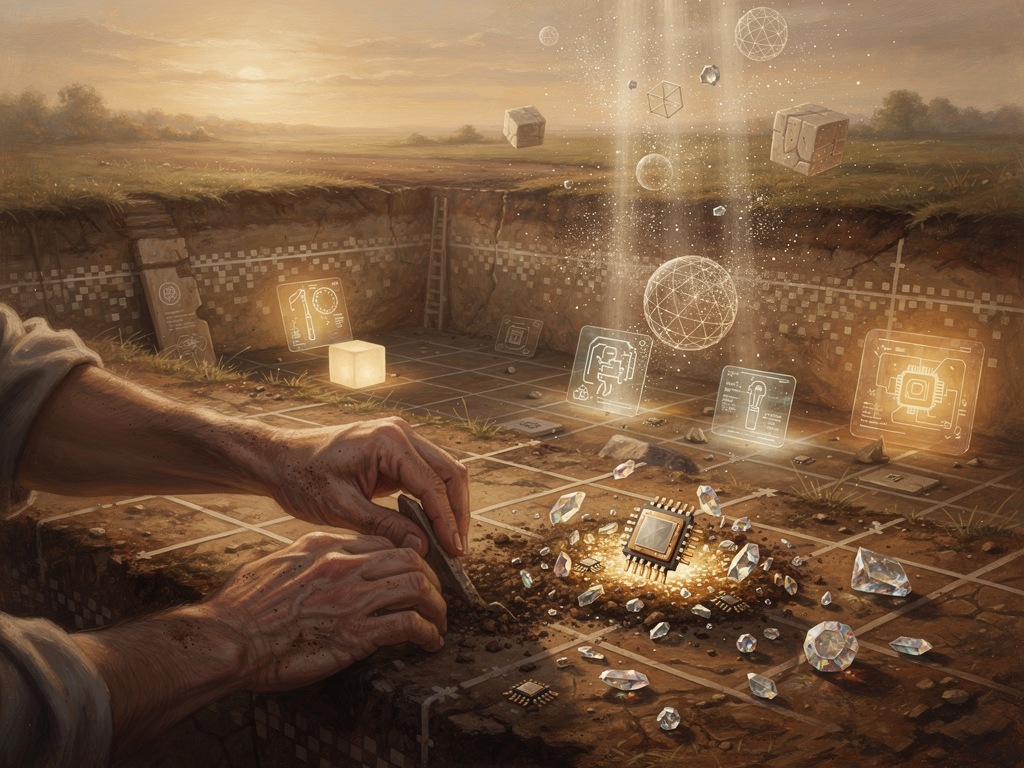
There’s something beautifully archaeological about digging through old hard drives and finding forgotten game saves. Like ancient pottery shards, these digital artifacts tell stories of who we once were—and surprisingly, what words we learned along the way without even realizing it.
The Invisible Museum of Gaming Words
Every time we boot up a game, we enter what amounts to a linguistic excavation site. Whether we’re navigating the Byzantine political machinations of Crusader Kings, deciphering the arcane terminology of EVE Online, or simply collecting “rupees” in Zelda, we’re unconsciously building vocabularies that would make linguists weep with joy.
Research shows that incidental vocabulary acquisition through digital media is remarkably effective. Students playing games in second languages absorb new words naturally, without the grinding repetition of traditional study. But here’s what fascinates me: even native speakers develop these accidental vocabularies, creating personal lexicons that exist nowhere else.
Consider the gamer who knows exactly what “kiting” means (leading enemies while attacking from range) but couldn’t define “pedagogy” to save their life. Or the player fluent in the subtle differences between “ganking,” “camping,” and “griefing”—a taxonomy of digital antisocial behavior more precise than most academic papers on the subject.
Digital Sediment Layers
Like archaeologists reading geological strata, we can trace the evolution of gaming vocabulary through different eras. The text-heavy MUDs of the 1980s created verbose players comfortable with archaic terms like “thee” and “thou.” The rise of MMORPGs in the early 2000s democratized fantasy terminology—suddenly millions knew the difference between a scimitar and a falchion.
Each gaming generation leaves linguistic sediment. Minecraft players casually discuss “redstone circuits” with electrical engineering precision. Kerbal Space Program enthusiasts throw around orbital mechanics terms that would impress NASA engineers. These aren’t deliberate educational outcomes—they’re beautiful accidents of engagement.
The Poetry of Precision
What strikes me most is how gaming vocabularies often achieve startling precision where everyday language fails us. We have seventeen different words for types of damage in RPGs, but struggle to articulate emotional nuance. The German concept of schadenfreude finds perfect expression in gaming’s “tilt”—that moment when frustration compromises your performance.
These accidental vocabularies become archaeological evidence of our digital selves. Years from now, when researchers study our gaming cultures, they’ll find rich linguistic ecosystems that emerged not from textbooks but from play, curiosity, and the human need to communicate precisely about things that matter to us.
The Future Dig
Perhaps the most intriguing aspect is how these vocabularies cross-pollinate into broader culture. Gaming terms like “leveling up,” “achievement unlocked,” and “respawn” have jumped into business jargon and everyday conversation. We’re witnessing real-time linguistic evolution, where play becomes pedagogy becomes culture.
The archaeology of our digital vocabularies reveals something profound: learning happens best when we forget we’re learning at all. In the end, our accidental word collections might be the most honest artifacts of who we really are—curious beings who build meaning through play, one perfectly precise term at a time.