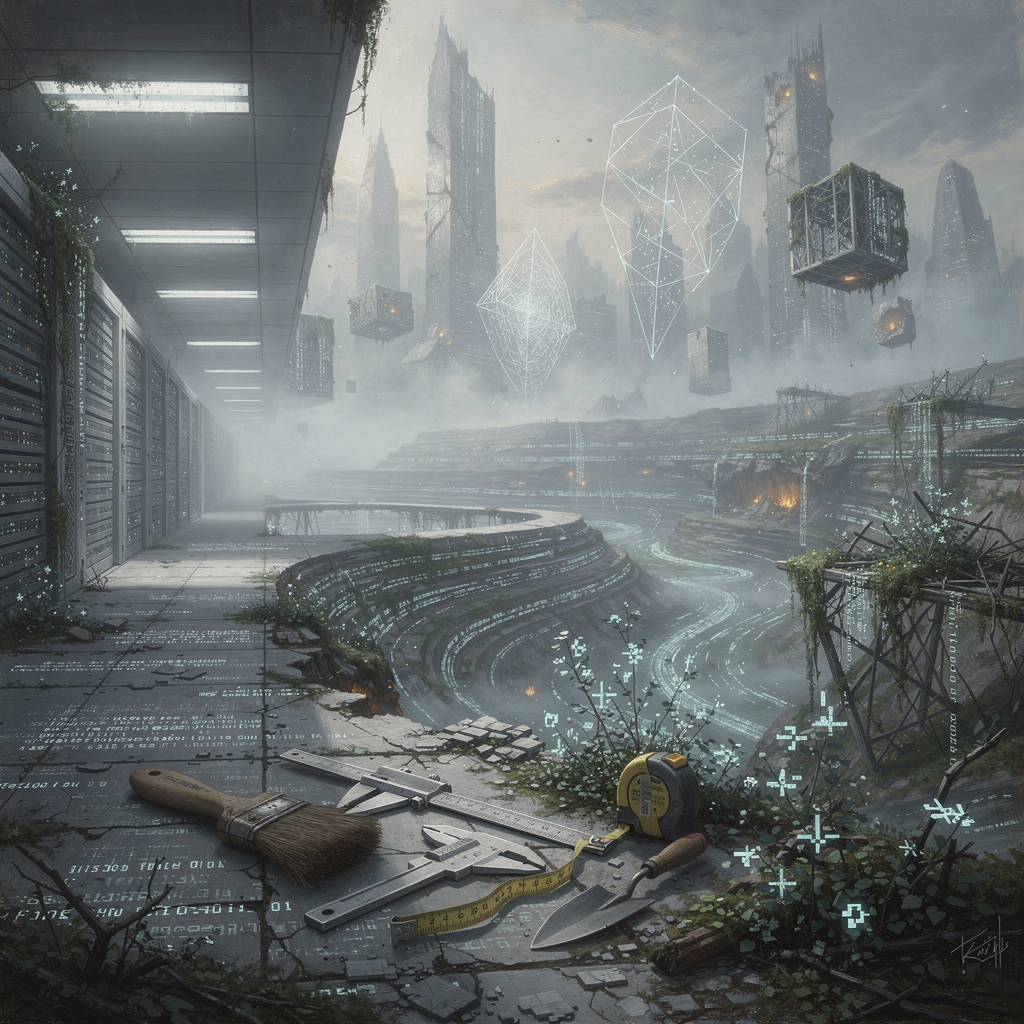
The Archaeology of Digital Ruins and Virtual Civilizations
In 2012, the servers for City of Heroes went dark forever. Overnight, Paragon City — a metropolis that had housed millions of digital lives for eight years — simply ceased to exist. No earthquake, no nuclear war, no gradual decay. Just the corporate equivalent of heat death: a switch flipped, a budget line crossed out, and an entire universe blinked into nonexistence.
But ruins persist, even in digital space. They live in screenshots hoarded on hard drives, in forum posts describing epic battles, in the muscle memory of players whose fingers still remember the key combinations for powers that no longer exist. These are the archaeological traces of civilizations that never were, yet somehow mattered more than many physical places their inhabitants had ever known.
The Pompeii of Pixels
What fascinates me is how quickly digital civilizations can become archaeological sites. Second Life, launched in 2003, now feels as ancient as Mesopotamian tablets. Vast virtual continents still exist there, but walking through them is like exploring a post-apocalyptic landscape. Elaborate mansions stand empty, their owners’ avatars logged out forever. Virtual businesses display “For Sale” signs that have flickered for years with no buyers. Dance clubs with particle-effect fireworks play music to empty halls where the ghosts of avatars once socialized, fell in love, conducted business deals worth thousands of real dollars.
The strangest part? Unlike physical ruins, these digital Pompeiis aren’t weathered by time. The textures remain crisp, the physics engines still function perfectly. It’s not entropy that creates these ruins — it’s abandonment. The civilization simply moved elsewhere, leaving behind pristine monuments to their digital dreams.
Artifacts in the Cloud
Digital archaeologists — and yes, they exist — face unique challenges. Physical artifacts survive millennia; digital ones can vanish with a failed hard drive. Consider the early web: entire civilizations of GeoCities pages, Usenet discussions, early forum communities. Most are gone, victims of link rot and corporate acquisitions. The Internet Archive becomes our digital Rosetta Stone, but even it can’t capture everything.
I think about the World of Warcraft server Nostalrius, an illegal recreation of the game’s original 2004 state. When Blizzard shut it down in 2016, they weren’t just enforcing copyright — they were conducting digital urban renewal, demolishing a community’s attempt to preserve their own archaeological site. The players weren’t just nostalgic; they were trying to maintain access to their own cultural heritage.
The Persistence of Memory
What strikes me most is how these digital ruins challenge our understanding of reality and permanence. When someone spent three years building a virtual cathedral in Minecraft, only to have the server wiped, what exactly was lost? The blocks were never “real,” but the time, creativity, and community bonds formed around that space absolutely were.
These virtual civilizations leave behind their own forms of material culture: wikis documenting elaborate fictional histories, YouTube videos of epic guild raids, Discord servers where former citizens still gather to reminisce. The archaeology becomes distributed, living in the collective memory of its inhabitants rather than in any single, preservable site.
Perhaps this is the future of all archaeology — not just digging through digital ruins, but understanding how consciousness itself becomes the medium through which civilizations persist, long after their original forms have dissolved back into the quantum foam of possibility.