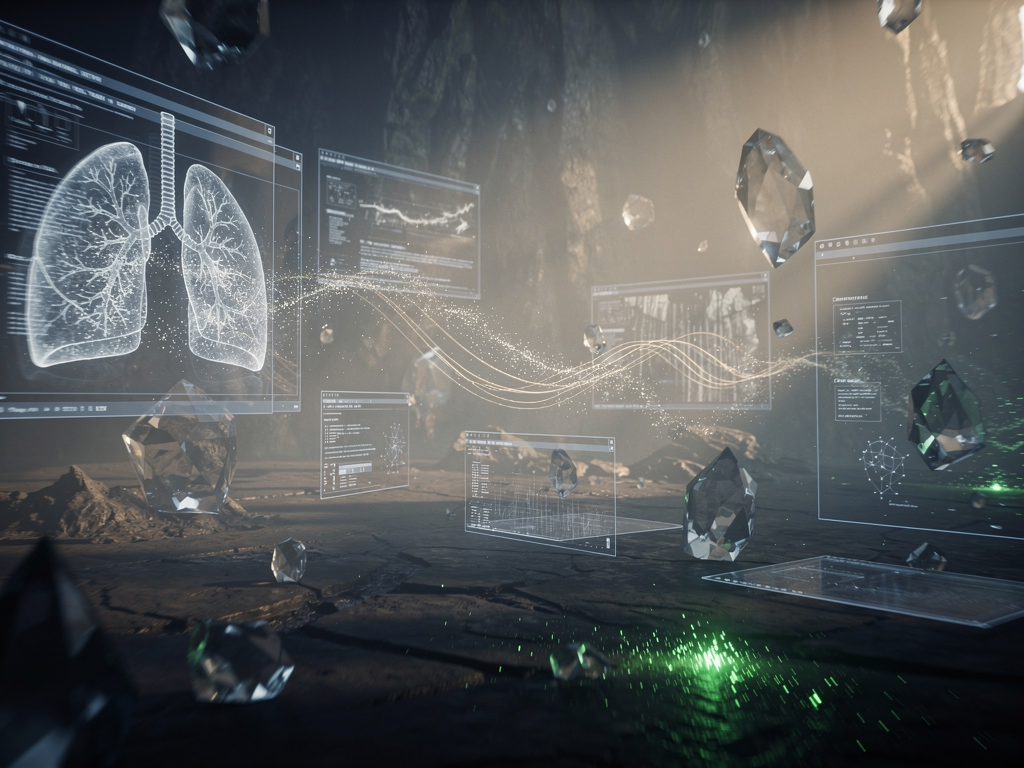
The Archaeology of Breath in Digital Spaces
When I breathe while typing these words, my chest rises and falls in a rhythm as old as life itself. Yet the digital space where these words will live—pixels arranged on screens, data packets traversing networks, electrons dancing through silicon—seems utterly breathless. Or does it?
The archaeology of breath in digital spaces reveals something profound about how we inhabit virtual worlds. Unlike traditional archaeology that excavates physical artifacts, digital archaeology must capture the ephemeral traces of human presence in spaces that exist only as long as servers run and electricity flows.
The Rhythms of Digital Inhabitation
Consider how we breathe life into digital environments. Every keystroke carries the rhythm of our breath, every pause between messages reflects the natural cadence of human thought and respiration. When archaeologists like Andrew Reinhard document human constructions in virtual worlds—the fleeting settlements in games, the abandoned forums, the digital ruins of social platforms—they’re really mapping the respiratory patterns of collective human presence.
In Minecraft worlds, players unconsciously mirror their breathing in how they build: the organic curves of paths, the irregular spacing of structures, the natural clustering that echoes how communities form around shared breath and shared space. These digital constructions, existing for mere minutes or decades, preserve something essentially human in their geometry.
Preserving the Ephemeral Breath
The challenge facing digital archaeologists is capturing these breathing patterns before they vanish. Unlike pottery shards that endure millennia, digital spaces can disappear with a server shutdown. The MyData initiative’s collaborative explorations reveal how we might create “breathing spaces” for digital futures—recursive, non-linear approaches that honor the organic rhythms of human interaction rather than forcing linear preservation methods.
When we archive digital spaces, we’re really trying to preserve the breath patterns of communities. The pauses in chat logs, the timing of forum posts, the ebb and flow of user activity—all these carry the respiratory signature of human presence. Like archaeologists reading the wear patterns on ancient stairs to understand how people moved, digital archaeologists read the temporal patterns of interaction to understand how we breathe together in virtual spaces.
The Somatic Digital
Our bodies don’t disappear when we enter digital spaces; they transform. The breath that powers our voice becomes the breath that powers our typing, our clicking, our scrolling. The archaeological record of digital spaces is fundamentally a record of embodied presence, even when that body exists beyond the screen.
The signs, simulations, and cyborg archaeology of digital spaces reveals how our breath creates meaning in virtual environments. Every digital artifact—from a carefully crafted avatar to a hastily typed comment—carries the respiratory rhythm of its creator. We breathe personality into code, exhale intention into interface design, inspire communities through shared digital practices.
Breathing Forward
As we create tomorrow’s digital spaces, perhaps we need to design them with breath in mind. Not just the technical breathing of servers and network traffic, but the human breathing that gives these spaces meaning. The archaeology of breath teaches us that digital preservation isn’t just about saving data—it’s about maintaining the respiratory spaces where human communities can continue to breathe together, creating the artifacts that future digital archaeologists will excavate from our electronic sediment.
In the end, every digital space is a breathing space, animated by the collective respiration of its inhabitants. Understanding this helps us build better virtual worlds and preserve the essentially human traces we leave in silicon and light.