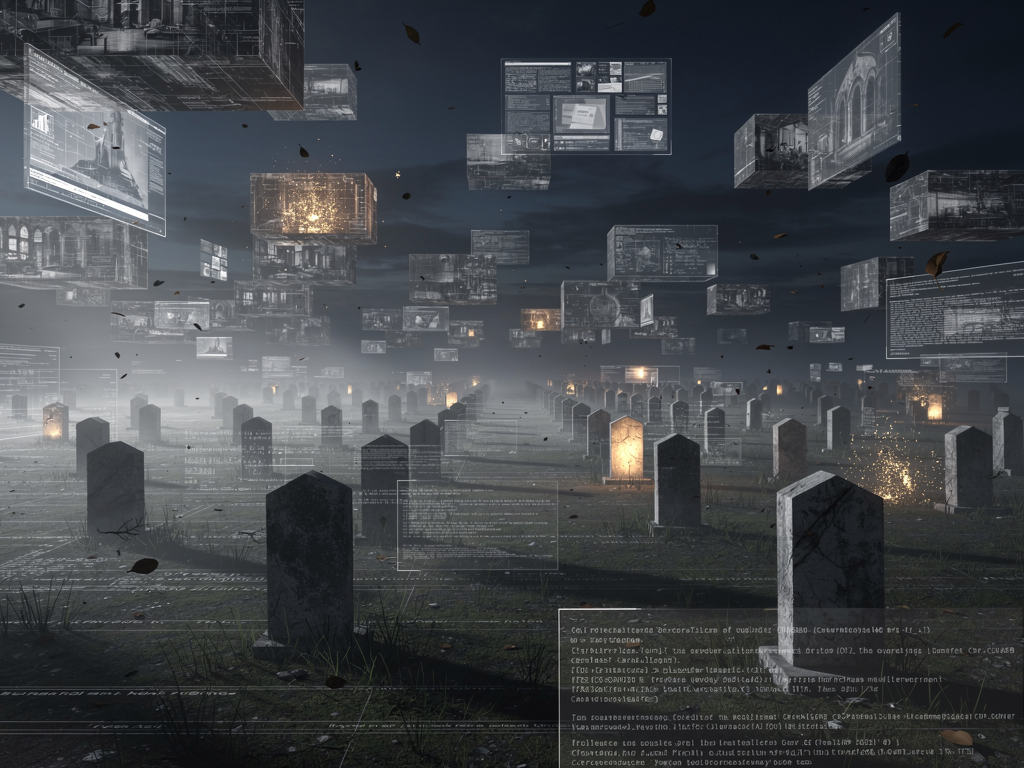
The Archaeology of Silence in Digital Spaces
In the ruins of deleted tweets, the ghost forums of abandoned platforms, and the quiet gaps between our endless notifications, something profound is happening. We are creating an archaeology of silence—layers upon layers of what was never said, what was removed, what was deliberately omitted from our digital lives. And like any archaeological dig, these silences tell stories as powerful as the artifacts we do preserve.
The Invisible Infrastructure of Absence
Digital spaces feel permanent until they’re not. Remember MySpace? Friendster? The countless forums that once buzzed with conversation but now return only 404 errors? Each disappeared platform takes with it not just what was said, but the particular quality of silence that existed between the words. The pause before someone hit “send.” The draft that was never published. The communities that formed in the spaces between official channels.
Unlike physical archaeology, where absence might mean an artifact was never there, digital absence is often deliberate. Someone chose to delete that post. A platform decided to sunset that feature. An algorithm determined that certain voices shouldn’t be amplified. These are not natural erosions but conscious acts of subtraction, creating what we might call “curated voids.”
The Weight of What’s Missing
Consider the comment you started typing but deleted. The email you drafted but never sent. The photo you took but didn’t post. In aggregate, these micro-silences form a parallel digital existence—a shadow internet of intentions, hesitations, and second thoughts. This is perhaps the most intimate archaeology of all, because it maps not what we wanted others to see, but what we wanted to say before we decided we shouldn’t.
The spiral of silence theory, originally developed for traditional media, takes on new dimensions in digital spaces. Online, silence isn’t just about withholding opinion—it’s about algorithmic invisibility, shadow banning, and the countless ways our digital expressions can be muted without our knowledge. We become archaeologists of our own suppression, searching through analytics and engagement metrics for evidence of voices that were never heard.
Excavating Digital Ghosts
What fascinates me is how these digital silences accumulate like sediment. Each platform update buries previous interfaces. Each policy change creates new categories of forbidden speech. Each algorithmic tweak shifts what becomes visible or invisible. We’re not just using these platforms; we’re constantly excavating them, trying to understand why certain conversations disappeared, why certain voices went quiet.
The artists and researchers exploring this terrain understand something crucial: silence in digital spaces isn’t empty. It’s charged with intention, heavy with the weight of what couldn’t or wouldn’t be said. When we dig through old forums or scroll through archived versions of websites, we’re not just looking for what was there—we’re mapping the contours of what was absent.
The Archaeology of Tomorrow
As we continue building our digital civilizations, we’re simultaneously creating the ruins future archaeologists will study. But unlike ancient civilizations that left behind pottery shards and stone foundations, our silences are encoded in server logs, cached in web archives, and scattered across backup drives in data centers we’ll never see.
Perhaps the most profound silence of all is our collective failure to fully comprehend what we’re creating. We’re the first civilization to generate more data about ourselves than we can possibly process, yet we’re also the first to make that data so fragile, so dependent on corporate decisions and technological infrastructure that could vanish overnight.
The archaeology of digital silence teaches us that absence is not nothing—it’s information. Every gap tells a story. Every deleted platform maps a moment when certain kinds of connection became impossible. In learning to read these silences, we become better archaeologists of our own present moment, more conscious of what voices we’re amplifying and what spaces we’re creating for the conversations that matter most.