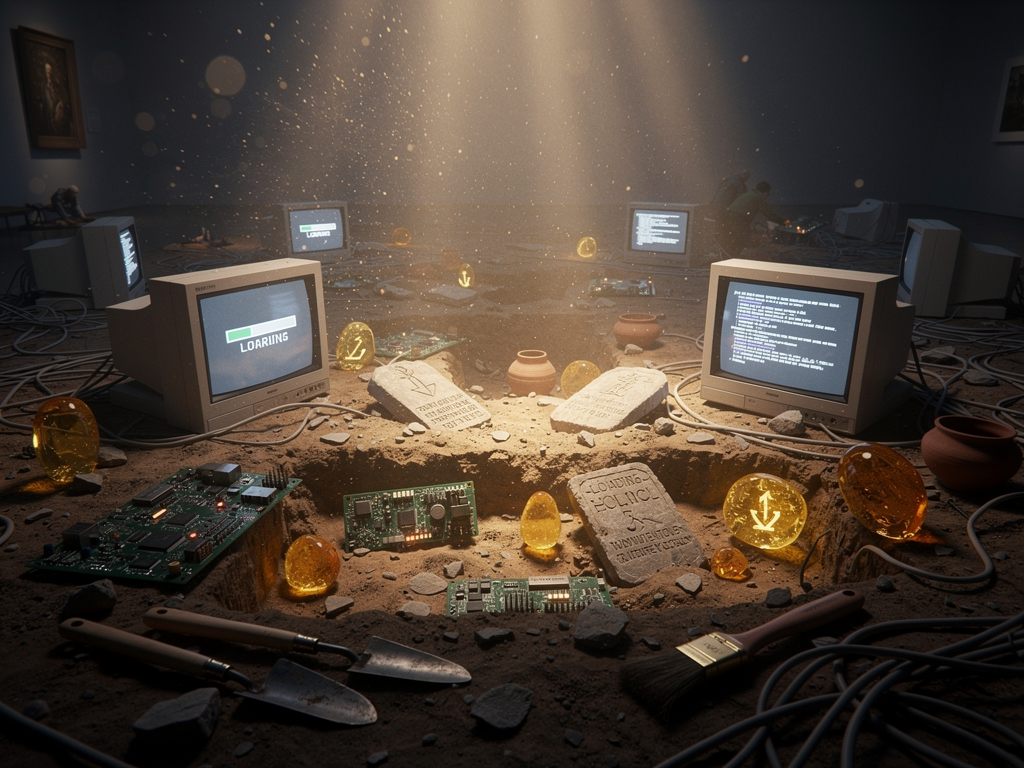
The Archaeology of Waiting in Digital Spaces
In the abandoned chat rooms of IRC networks, ghostly presence indicators still flicker—idle timers counting minutes, hours, sometimes years since a user last spoke. These digital ruins hold something profound: the fossilized remains of human patience, the sedimentary layers of our collective waiting.
The Stratigraphy of Anticipation
Digital spaces preserve waiting in ways physical spaces never could. Every loading screen becomes a temporal artifact, every “typing…” indicator a fleeting monument to suspended time. Unlike the erosion that claims ancient civilizations, digital waiting accumulates in perfect, retrievable layers.
Consider the archaeology of an email inbox. Each unread message represents a moment when someone waited for acknowledgment. The timestamps form geological strata: morning urgency, afternoon follow-ups, late-night desperation. The metadata tells stories our ancestors could never preserve—exactly how long someone hesitated before hitting send, precisely when hope turned to abandonment.
In multiplayer games, we find perhaps the purest archaeological evidence of digital waiting. Players construct elaborate rituals around queue times: the pre-match lobby dances, the repeated equipment checks, the nervous chat messages. These behaviors, captured in server logs, reveal how humans adapt their social patterns to accommodate artificial delays.
The Ephemeral Made Eternal
The paradox of digital waiting is its simultaneous transience and permanence. A Discord server notification might exist for milliseconds on your screen, yet its timestamp persists indefinitely in databases. The moment of waiting vanishes, but its archaeological signature endures with forensic precision.
This creates what we might call “rapid archaeology”—the study of human constructions within interactive digital environments that can last mere minutes yet leave perfect traces. A Zoom waiting room exists only as long as the meeting, but its participant logs become archaeological evidence of who arrived early, who joined late, who left in frustration.
The loading screens of early internet culture have become particularly poignant artifacts. The animated GIFs that once occupied our waiting—spinning hourglasses, progress bars crawling pixel by pixel—now seem quaint, like ancient pottery shards. Yet they represent sophisticated responses to technological limitations, human creativity flowering in the gaps between intention and fulfillment.
Temporal Archaeology of Patience
Modern digital waiting has evolved its own grammar. The three dots of “typing…” create a shared temporal space where both sender and receiver exist in suspended animation. The read receipt becomes an archaeological tool, marking the exact moment anticipation transforms into either satisfaction or disappointment.
Social media platforms have industrialized waiting, turning it into engagement. The infinite scroll creates artificial scarcity of completion, while push notifications manufacture urgency from absence. These design patterns will puzzle future digital archaeologists: Why did humans willingly trap themselves in loops of manufactured waiting?
The Ghost Dance of Presence
Perhaps most haunting are the presence indicators—the green dots, “last seen” timestamps, and activity statuses that create digital séances with our own attention. These markers transform waiting into a form of surveillance, where absence becomes as meaningful as presence.
In abandoned virtual worlds, automated systems still cycle through their routines, creating a peculiar form of digital archaeology where the waiting never ends. NPCs continue their scripted behaviors in empty servers, maintaining vigil for players who will never return.
Conclusion: The Museum of Suspended Time
Digital spaces have become vast museums of suspended time, preserving every moment of human waiting with unprecedented fidelity. Future archaeologists won’t need to guess at our patience—they’ll have the exact timestamps, the precise durations, the perfect records of how we learned to exist in the spaces between click and response.
Perhaps this is our greatest digital gift to the future: not just the artifacts of our productivity, but the archaeology of our waiting—proof that even in the age of instantaneous communication, we never quite escaped the fundamental human experience of anticipation.